 Skip to content
Starting in January 2026, demand for single-mode optical fiber suddenly surged. Inquiries flooded in, with customers everywhere eager to purchase large quantities of G657A2 bare fiber, and their demand was substantial. However, throughout the domestic supply chain, prices skyrocketed, and the most frequently heard phrase was, “No stock, no stock! Even if a little stock occasionally appears, the price is higher every day, and quotes are only valid for the day, sometimes even increasing again within half a day! If you want to order, you need to pay a deposit first and wait in line for several months.” This was unprecedented in the history of the optical communication industry.
Operators were also struggling. In early February, China Telecom Guangdong urgently suspended two optical cable procurement projects. Industry insiders knew perfectly well: with fiber prices soaring, bidding prices were a joke, and no one dared to bid.
What exactly happened?
Within just two months, fiber prices experienced an epic leap, even leading to the rare seller’s market situation where “quotes are only valid for the day they are quoted”???
Price Surge History: A Crazy 650% Increase
After years of stagnation, the price of single-mode optical fiber has now taken off. According to the latest market research from C-FOL.NET, as of March 4th, the prices of various fiber optic models have broken through the industry’s perceived “ceiling”:
- G.652.D single-mode fiber: Before New Year’s Day, RMB 18/km → Now RMB 85~120/km, an increase of nearly 650%
- A1 (G.657.A1) single-mode fiber: Before New Year’s Day, RMB 23/km → Now RMB 115~135/km, an increase of nearly 487%
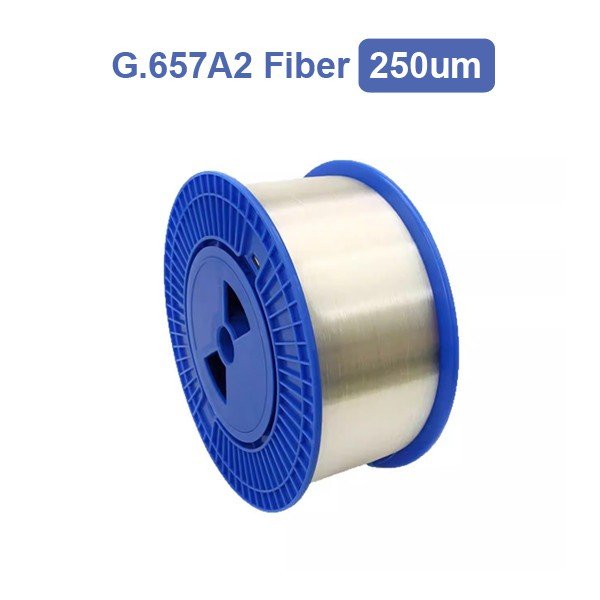
- A2 (G.657.A2) single-mode fiber: Before New Year’s Day, RMB 35/km → Now RMB 210~230/km, an increase of nearly 557%
Currently, single-mode optical fiber is divided into models such as G.652D, G.657A1 fiber, G.657A1 PLUS, G.657A2, and G.657B3 fiber. The characteristics and application scenarios of each fiber are different. Details are as follows:
| Single-mode Fiber Type | Main Application Areas | Specific Scenario Examples |
| G.652D single-mode fiber | Basic communication networks (mainstay) | Suitable for long-haul trunk lines, metropolitan area networks, and access networks. It forms the foundation for voice, data, and video transmission, widely used in various fiber optic cables by telecom operators, primarily for in-home networks. |
| G.657A1 single-mode fiber | High-density cabling environments | Used for patch cords within data centers, fiber-to-the-home (FTTH), building cabling, etc. It is compatible with G.652D characteristics but offers better bending performance (minimum bending radius approximately 15mm), suitable for dense indoor cabling in compact spaces with many corners. |
| G.657A1-Plus single-mode fiber | More demanding compact environments | Further optimized from A1, typically referring to fibers with smaller layer diameters (e.g., 190um), used for micro-cables or patch cords requiring more fiber cores, achieving ultra-high-density cabling. |
| G.657A2 single-mode fiber | Special applications (extremely compact, high bending resistance) | Core applications: Fiber optic guided drones (military and industrial grade), fiber-to-the-home drop cables, micro-fiber cables, etc. Its bending radius can be compressed to 7.5mm, allowing it to be bent freely like a thin wire without affecting the signal, perfectly matching the needs of drones that require tangling and repeated bending. Currently, single-mode MPO mainly uses A2 fiber. |
| G.657B3 single-mode fiber | Special components (more bending resistant than A2) | Core Applications: Miniature optical devices |
Why the sudden fiber shortage?
Demand side: The AI craze combined with wartime demands has drained inventory
First, let’s talk about AI.
In current AI computing centers and data centers, the connections between servers equipped with graphics processing units (GPUs) all require fiber optic cables. A standard computing cluster with 10,000 GPUs requires tens of thousands to millions of kilometers of fiber optic cable just for the internal server interconnections. For example, Metaverse is building a 5 gigawatt AI data center in Louisiana, USA, and this project alone has purchased 13 million kilometers of fiber optic cable from Corning, an American supplier. (Note: Metaverse is designated as an extremist organization in Russia)
CRU data shows that global demand for data center fiber optics is expected to surge by 75.9% year-on-year in 2025. This demand has directly driven a surge in demand for single-mode fiber, especially long-distance A2 50.4km and 60km single-axis fiber.
If we only consider global AI computing power, fiber optic cable supply is more than sufficient. However, the surge in demand for fiber optic cables from the defense industry has further exacerbated the shortage, particularly for specialized applications like G657A2 fiber.
For example, a single fiber-optic guided drone can consume 10-40 kilometers of fiber per flight, and it’s disposable. This “consumable” use pushes already strained inventories to the brink. Chunsheng, an analyst at the Fiber Optic Cable Research Center of Beijing Universitsy of Posts and Telecommunications, revealed to the report that after Russia and Ukraine begin using fiber optic cables in first-person perspective remote-controlled drones in 2025, Russia’s fiber optic procurement will account for 10.5% of the global market, compared to less than 1% previously.


Supply Side: Optical Fiber Preform Bottleneck – Only Four Major Domestic Manufacturers
The lifeline of optical fiber lies in the upstream “optical fiber preform” (optical fiber rod), accounting for 60-70% of the cost. This technology has high barriers to entry, and for many years, due to persistently low prices, only a handful of companies have mastered optical fiber preform technology.
Globally, only a handful of companies can produce their own optical fiber preforms like Yangtze Optical Fibre and Cable (YOFC), Hengtong, Fiberhome, Zhongtian, etc. However, their product categories and technologies differ significantly. According to reports, these companies have order backlogs extending into 2027 or even 2028, leaving them with no extra capacity to meet the current market demand and orders.
This situation has led to the shutdown of some optical fiber manufacturers that rely on externally sourced preforms, as they are unable to purchase raw materials. Downstream optical cable manufacturers are essentially paralyzed because optical fiber prices are unstable and optical cable costs are uncontrollable, resulting in quotes being valid only for the day of purchase or simply not being quoted at all.

DAILY INVENTORY LIST
Yingda maintains a daily inventory of varying quantities and lengths of optical fiber. Any inquiry, please contact us promptly!
Quotes are valid only for the day of publication!
Will fiber optic prices continue to rise? Or is this just the beginning?
How long will it take to expand fiber optic preform production? This means that even if factories start building now, new capacity won’t be available in the short term. Until then, a tight supply-demand balance is almost a certainty. Driven by the soaring computing power of AI and specialized demands, this glass fiber, thinner than a human hair, is becoming the most sought-after strategic resource in the digital economy era.
However, some industry insiders offer a different perspective: “You can still buy fiber optics if you have the money; it’s not completely unavailable. Is this round of price increases due to genuine scarcity, or is it deliberate manipulation? Opinions within the industry differ.”
Is this fiber optic shortage just beginning, or is it nearing its end? The market awaits the answer.
Customers, given the current fiber optic prices, will you buy or not?
