 Skip to content
Intelligent transportation systems rely heavily on fiber optic communication networks as their “nervous system” to achieve real-time and reliable transmission of massive amounts of data.
Core Fiber Optic Transmission Network (Trunk Communication Cables)
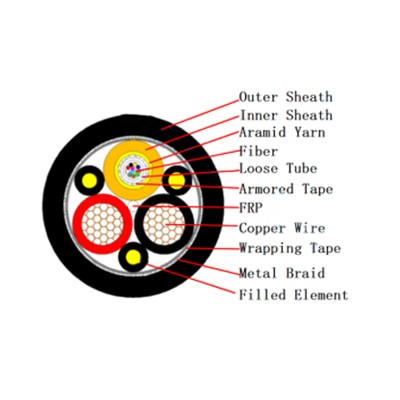
- Duct Cables: Laid in underground city ducts, forming the metropolitan backbone network for intelligent transportation.
- Direct-Buried Armored Cables: Used in areas without ducts, such as along highways and railways, providing resistance to pressure and rodent damage.
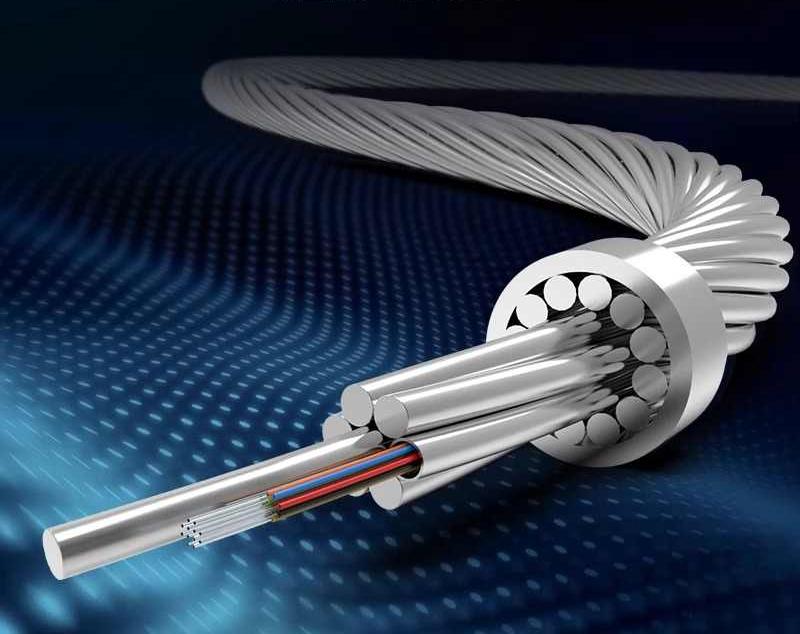
- OPGW cable (Optical Ground Wire): Installed on power transmission line towers, used for both power transmission and communication, commonly found along high-speed railways and highways.
- ADSS cable (All-Dielectric Self-Supporting Cable): Does not require attachment to power lines and is independently installed on poles along roadsides.

Roadside and Intersection Connectivity Equipment
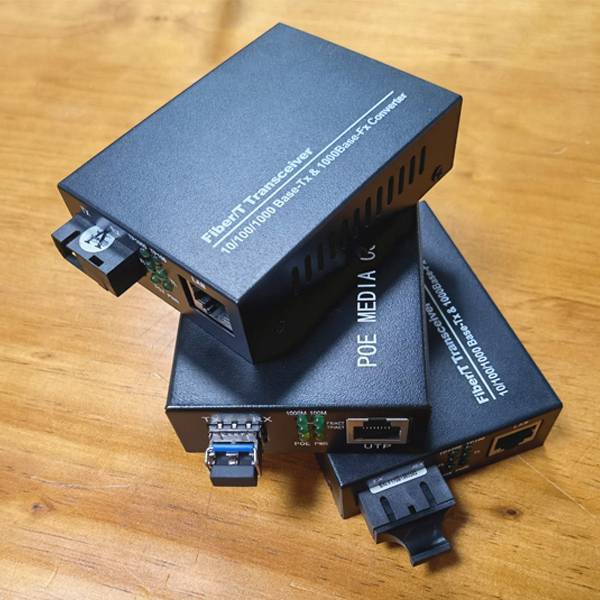
1. Industrial Fiber Optic Transceiver/Media Converter
Fiber transceivers convert Ethernet electrical signals from intersection traffic signal controllers, electronic police systems, and checkpoint cameras into optical signals for transmission back to the traffic control center via fiber optic cables.
2. Industrial Ethernet Switch (with Fiber Optic Ports)
- Intersection access switch: Equipped with multiple fiber optic ports to aggregate data from multiple roadside devices (such as cameras, radar, and variable message signs).
- Ring network redundant switch: Forms a self-healing fiber optic ring network (such as RSTP/ERPS) on highways or urban main roads to ensure uninterrupted operation of critical services such as traffic light control and event detection.


Vehicle-to-Infrastructure Collaboration and Intelligent Connectivity
1. Fiber to the Roadside
Fiber optics as the “nervous system”: Providing ultra-high bandwidth and low-latency backhaul connections for roadside RSUs, MEC (Multi-access Edge Computing) servers, millimeter-wave radar, lidar, etc., supporting autonomous driving and vehicle-to-infrastructure collaboration.
2. Fronthaul and Backhaul Networks
- 5G small cell fiber fronthaul: Deploying dedicated 5G networks at transportation hubs and smart intersections, with fiber optics providing fronthaul links for base stations.
- V2X backhaul: The large amount of data generated by vehicle-to-infrastructure collaboration applications is aggregated to the edge cloud or central cloud through the fiber optic network.

Center and Platform Interconnection
1. Internal Optical Interconnection within the Data Center
High-speed optical modules: Used for connections between servers and core switches within traffic command centers and cloud computing data centers (e.g., 10G/25G/100G SFP+/QSFP+ optical modules).
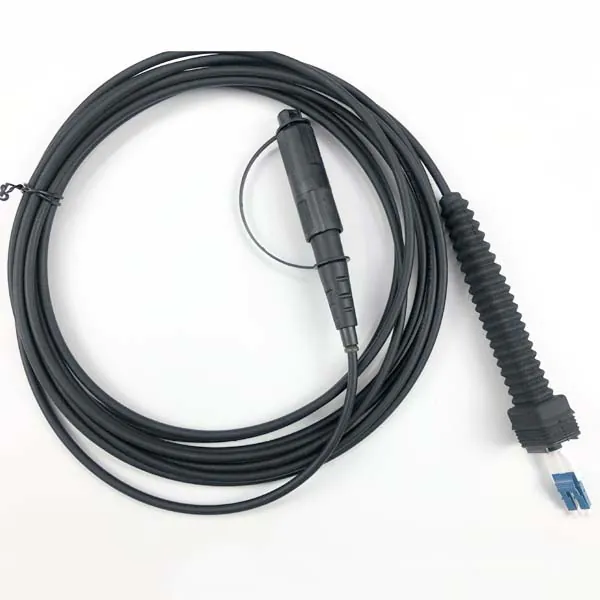
Pre-terminated fiber optic cables: Used for high-speed interconnection between data center racks, enabling rapid deployment.
2. Wavelength Division Multiplexing Equipment
CWDM/DWDM: Multiplexes multiple traffic video, data, and voice signals over limited fiber optic resources, achieving efficient interconnection between the command center and multiple field sites

Product Table Corresponding to Typical Application Scenarios
| Application Scenarios: | Core Requirements: | Main Fiber Optic Products: |
| Smart urban traffic signal control | High reliability, low latency, and interference resistance | Industrial Ethernet Switches, Single-Mode Fiber Optic Cables, Fiber Optic Transceivers |
| Highway monitoring and communication | Long-distance, all-weather, and multi-service capabilities | OPGW/ADSS Fiber Optic Cables, Industrial Switches, Wavelength Division Multiplexing Equipment |
| Tunnel integrated management | Security early warning, environmental monitoring, and emergency communication | Distributed Fiber Optic Sensing Systems, Flame-Retardant Armored Fiber Optic Cables, Industrial Grade Connectors |
| Rail transit signaling and communication | Absolute security, electromagnetic immunity, and high real-time performance | High Protection Level Fiber Optic Cables, Dedicated Fiber Optic Networks for Signal Systems, Redundant Ring Network Equipment |
| Bridge health monitoring | Long-term, continuous, and precise structural monitoring | Fiber Bragg Grating Sensor Systems, Dedicated Monitoring Fiber Optic Cables |
| Vehicle-road collaborative demonstration zones | Ultra-low latency, ultra-high bandwidth, and edge computing | Low Latency Optical Modules, MEC Fiber Optic Access, High-Density Pre-terminated Solutions |
| Traffic command center/cloud platform | Massive data aggregation, processing, and storage | Data Center High-Speed Optical Modules, Pre-terminated Fiber Optic Cables, Core DWDM Equipment |
Key Considerations for Technology Selection
- Reliability: Industrial-grade products (wide temperature range, lightning protection) must be selected to withstand harsh outdoor environments.
- Real-time performance: For scenarios such as vehicle-to-infrastructure communication and signal control, fiber optic network equipment supporting TSN should be prioritized.
- Scalability: Standardized interfaces (such as SFP) should be used to facilitate future bandwidth upgrades.
- Intelligent management: The equipment should support network management protocols such as SNMP to enable remote monitoring and fault diagnosis of fiber optic links.
Future Trends
The fiber optic network for intelligent transportation is evolving towards “integrated sensing, transmission, and computation”:
- Integration of fiber optic sensing and communication networks: The same fiber optic cable transmits data and acts as a sensor (e.g., DAS), enabling all-weather intelligent sensing of infrastructure.
- All-optical network architecture: Utilizing technologies such as PON to simplify roadside equipment access layers and reduce operation and maintenance costs.
- Integration of optical and wireless technologies: Fiber optics serve as the fixed backbone, combined with wireless technologies such as 5G/6G and Wi-Fi 6, to build a three-dimensional integrated air-ground transportation communication network.
Conclusion
Fiber optic products are the physical foundation for intelligent transportation to “collect, transmit, and process” massive amounts of data. Their high reliability, large capacity, and anti-interference characteristics are key enabling technologies for ensuring traffic safety, improving traffic efficiency, and realizing intelligent connectivity.
