 Skip to content
When choosing a SFP optical transceiver module, the lowest price isn’t always the best; suitability is key. So how do we select an optical module that’s compatible with our equipment, cost down, but matches our functionalities?
We need to consider several key factors comprehensively, not only one factor. Below are some key selection points, hope it can help you in some way.
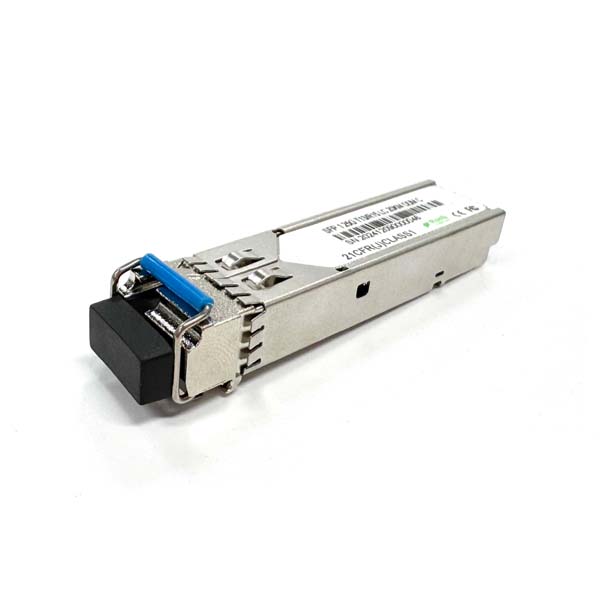
Determine the transmission rate
First, clarify whether your network requirements are gigabit (1.25G) or 10-gigabit (10G). Choosing the wrong option will result in substandard network speeds and impact performance.
- Gigabit optical modules (such as 1.25G) are suitable for daily office work and general monitoring.
- 10-gigabit optical modules (such as 10G) are suitable for high-speed scenarios such as large data centers and 4K video transmission.
Choosing Transmission Mode and Fiber Type
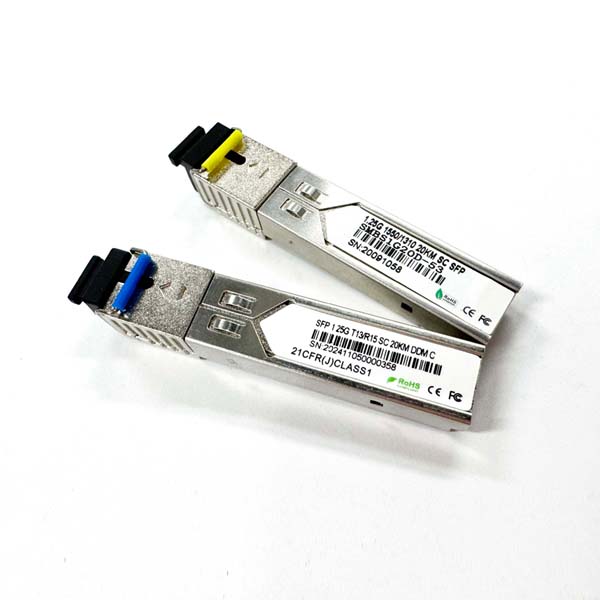
Based on transmission distance and cost, choose single-mode or multimode fiber:
- Single-mode fiber transceiver adopt thin 9um fiber core, 1310nm or 1550nm wavelength, transmission distance can reach over 2 km, it is suitable for metropolitan area networks (MANs) and wide area networks (WANs). The pull ring (bail clasp) is typically blue, yellow, or purple.
- Multimode fiber transceiver adopt thicker core 50um or 62.5um, 850nm wavelength, transmission distance is typically no more than 2 km, lower cost, suitable for local area networks (LANs) and data centers. The pull ring is generally black.
Considering transmission distance
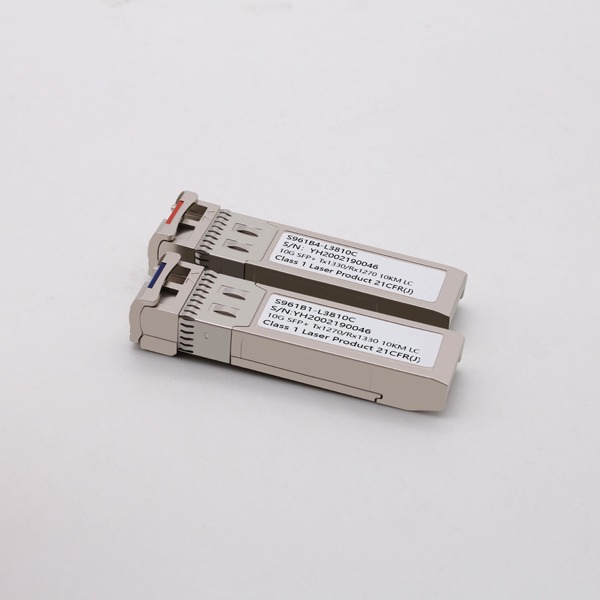
SFP optical transceiver modules transmission distance can be 3 types: short-distance (≤2km), medium-distance (10-20km), and long-distance (≥30km). Please choose the distance based on actual network requirements, taking into account signal loss and dispersion in the optical fiber.
For example, a 10G multimode module (such as SFP-10G-SR) can transmit up to 400 meters, while a 10G single-mode module (such as SFP-10G-LR) can reach 20 kilometers.
Note the operating environment
- Industrial grade: Wide operating temperature range (-40℃~85℃), supports 24/7 operation, suitable for harsh environments such as factories and outdoor base stations.
- Commercial grade: Operating temperature 0℃~70℃, suitable for stable environments such as enterprise server rooms and office buildings.
- Extended grade: Temperature range from -20°C to +85°C, suitable for scenarios with large temperature fluctuations.
Check compatibility and brand
Ensure the SFP optical transceiver module is compatible with your switches, routers, and other devices. Mainstream brands such as Huawei, H3C, and Ruijie usually have dedicated modules, while compatibility with third-party brands also needs to be verified. Module parameters can be quickly identified by labels (e.g., “10G” or “1310nm”) when purchasing.
GET IN TOUCH
Yingda optical transceiver are compatible with most of the brands on market
Other Precautions
- Optical Module Type: Single-mode optical transceiver modules are compatible with multimode fiber types, but the reverse is not ok.
- Installation and Maintenance: Hold the latch when plugging or unplugging; avoid pulling the ring (bail clasp) forcefully. Wearing anti-static gloves is recommended.
- Warranty and Service: Yingda optical transceivers offer 7-day no-reason return and 3 year warranty services.
By following the steps above, you can systematically select suitable SFP optical transceiver modules.
FAQ
How is the performance of third-party compatible modules?
Third-party compatible modules for 1.25G single-mode optical modules can usually meet basic performance requirements, but they may be slightly inferior to original modules in terms of stability, compatibility, and long-term reliability.
SFP Optical transceiver module transmission distance range
Third-party compatible modules for 1.25G single-mode optical modules can usually meet basic performance requirements, but they may be slightly inferior to original modules in terms of stability, compatibility, and long-term reliability.
Common Problems with SFP Optical Ports
The optical port of an SFP optical transceiver module is a key component for signal transmission. Common problems include port contamination, physical damage, and malfunctions caused by improper cleaning. These problems directly affect the transmission quality of the optical signal and can even lead to link interruptions.
What’s the difference between Gigabit SFP and 10 Gigabit SFP?
The Gigabit SFP module is labeled 1.25G, while the 10 Gigabit module is labeled 10G; they look almost identical, but the speed difference is 8 times.
Gigabit SFP optical modules are suitable for daily office and monitoring, while 10 Gigabit modules can transfer large files instantly, support 4K monitoring, and transmit 4K/8K high-definition video. 10 Gigabit is the essential choice for large data center networks to avoid lag. Check the label to identify the speed.
