 Skip to content
The optical modules used in IIoT are not a special category of products, but their selection criteria and application scenarios differ significantly from those of commercial data centers. The key differences lie in reliability, environmental adaptability, and long-term stability.
Classification by Packaging Form (Most Commonly Used)
1. SFP / SFP+ (Small Form-Factor Pluggable) Modules
These are the most common modules in IIoT networks, used for Gigabit and 10 Gigabit access.
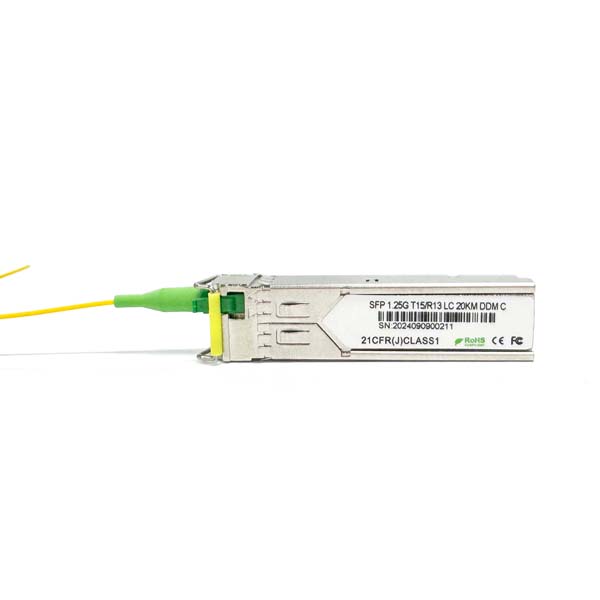
SFP module:
Supports 1.25Gbps (Gigabit Ethernet, Fibre Channel, etc.), and is the workhorse for connecting field devices, controllers, and access layer switches.
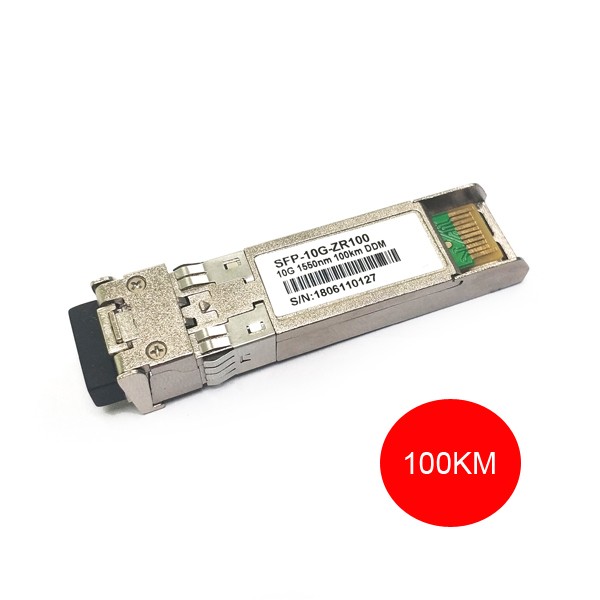
SFP+ module:
Supports 10Gbps, used for backbone links, server connections, or machine vision systems requiring high bandwidth.
Industrial-grade features:
- Wide temperature range models: Modules with an “industrial temperature range” must be selected, typically specified as -40℃ to 85℃ (commercial grade is 0℃ to 70℃).
- High-reliability components: Suitable for vibration and long-term continuous operation.
2. SFF (Small Form-Factor) Modules
Some early or specific industrial equipment (such as certain PLCs and serial servers) integrate fixed or pluggable SFF modules (such as 1×9, an early form of SFP), but this trend is being replaced by SFP.
3. QSFP+/QSFP28 Modules
Used for higher-density 40G/100G aggregation or core layers, found in scenarios such as large smart manufacturing parks and data center interconnects, but less commonly used at the factory floor level.

40G QSFP+ module
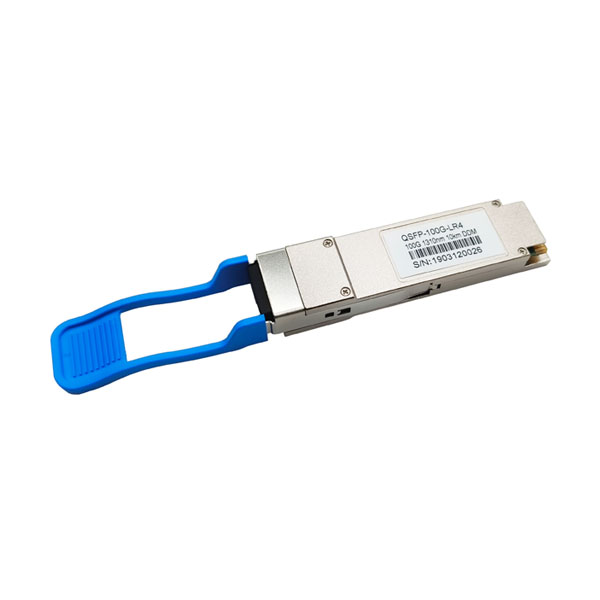
100G SFP module
Classification by Fiber Type and Transmission Distance (Core of Technology Selection)
When selecting optical transceiver modules, the combination of modules and optical fibers must be determined based on transmission distance and bandwidth.
| SFP module types | Fiber Type | Transmission distance | IIOT Application | Core advantages |
| Multimode transceiver | Multimode fiber | Short distance | Interconnection of equipment within workshops and production lines | Low cost, large connector alignment tolerance, and easy installation and maintenance. |
| 850nm wavelength | OM2: 550m @1G | PLC to local I/O stations, robot controller connections, and interconnections within control cabinets. | ||
| (Typically VCSEL laser) | OM3: 300m @10G | Extremely long transmission distance and unlimited bandwidth potential, ensuring future upgrade capabilities. | ||
| Single mode transceiver | Single-mode fiber | Long distance | IIoT backbone network, outdoor and cross-building applications | |
| 1310nm / 1550nm wavelength | 10km, 20km, 40km, 80km and above | Factory backbone ring network, data transmission from the field to the central control room, and remote site connections for smart transportation/energy. | Saves half the fiber optic cables, enabling bidirectional communication with a single fiber. | |
| (Typically FP/DFB laser) | ||||
| Bidirectional transceiver | Single-mode fiber | Long distance | Scenarios with limited fiber optic resources | Transmits multiple signals over a single fiber, greatly improving bandwidth utilization. |
| Using WDM technology, one end transmits at 1310nm and receives at 1550nm, and the other end is the opposite. | Typical 10km, 20km | Older factories with full fiber optic conduits, long-distance point-to-point links (such as remote pumping station monitoring). | Low cost, large connector alignment tolerance, and easy installation and maintenance. | |
| CWDM/DWDM transceiver | Single-mode fiber | Long range | Ultra-large-scale backbone networks, multi-service aggregation | |
| Transmitting different wavelengths in the same optical fiber. | 10km, 20km, 40km, 80km and above | Large campuses multiplex video, control data, voice, and other system traffic onto a single backbone fiber optic cable. | Extremely long transmission distance and unlimited bandwidth potential, ensuring future upgrade capabilities. |
Key Technical Parameters and Certifications of Industrial Optical Transceiver Modules
When selecting IIoT optical transceiver modules, you must not only consider speed and distance, but also pay attention to the following “industrial attributes”:
1. Operating Temperature Range: -40°C to 85°C is the standard for industrial-grade modules. Essential for outdoor cabinets, high-temperature areas in steel plants, and cold regions in the north.
2. DDM/DOM Function: Digital Diagnostic Monitoring. This is a crucial operation and maintenance function. It allows real-time reading of the module’s parameters through the network management system, including:
- Temperature
- Supply voltage
- Transmit and receive optical power
- Laser bias current
- Helps predict failures and locate link problems (such as excessive attenuation due to fiber bending or dirty connectors).
3. High Reliability and Long Lifespan: High mean time between failures (MTBF), long laser lifespan, and support for 7×24 uninterrupted operation.
4. Electromagnetic Compatibility: Passed EMC tests in industrial environments, with strong resistance to electromagnetic interference.
5. Compliance and Certification: Whether it has passed relevant industry certifications (such as telecommunications network access and power industry standards).
Examples of Typical IIoT Scenario Selection
| Scenarios: | Recommended Optical Transceiver Combinations: | Reasons: |
| Robot cell in a workshop | Multimode SFP, 850nm, Gigabit, Industrial Wide Temperature Range | Short distance (<100 meters), sufficient bandwidth, optimal cost, vibration resistance. |
| Smart factory backbone network | Single-mode SFP, 1310nm, Gigabit/10 Gigabit, 10-20km, Industrial Wide Temperature Range with DDM | Distance covers the entire factory area, high reliability, and DDM function facilitates network-wide monitoring. |
| Remote wind turbine monitoring | Single-mode SFP, 1310nm, Gigabit, 20km or more, Industrial Wide Temperature Range | Ultra-long-distance transmission, suitable for extreme temperature variations in outdoor environments. |
| Highway surveillance | BiDi SFP, Gigabit, 20km, Industrial Wide Temperature Range | Saves fiber optic resources along the route and simplifies the link. |
| Oil and gas pipeline SCADA system | Single-mode SFP, 1550nm, Gigabit, 40km+, potentially requiring explosion-proof certification | Ultra-long-distance relay, suitable for outdoor and potentially hazardous environments. |
Golden Rules for Optical Transceiver Module Selection:
- “Single-mode first” principle: Unless the distance is very short (<500 meters) and cost is extremely sensitive, it is recommended to prioritize single-mode fiber and single-mode optical modules. Single-mode systems offer advantages in terms of total cost of ownership (TCO) over their long lifecycle and greater upgrade flexibility.
- “Industrial wide temperature range” is the baseline: In any IIoT environment outside of temperature-controlled data centers, industrial temperature range optical modules must be selected.
- “DDM function” is essential: For networks requiring centralized management and preventive maintenance, DDM (Digital Diagnostic Monitoring) is a necessity.
- Compatibility with switch brand: Although most industrial switches support multi-vendor optical modules, using modules from the original manufacturer or those certified in their compatibility list provides better stability and technical support.
- Consider future upgrades: Choose switches with ports that support higher data rates (such as SFP+ ports). You can initially use Gigabit modules and upgrade to 10 Gigabit modules as needed in the future.
Conclusion
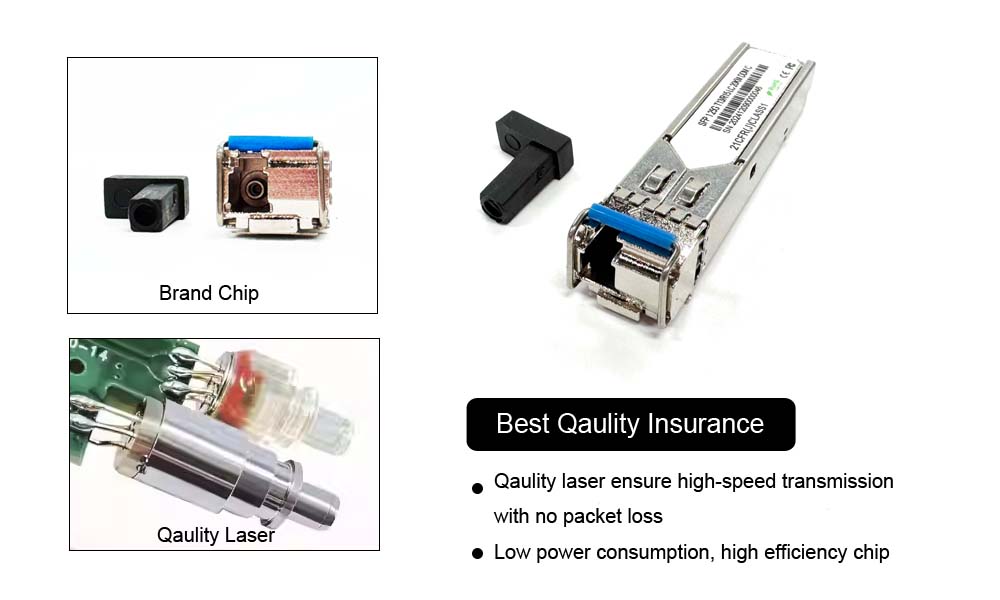
The core of optical transceiver modules commonly used in IIoT is SFP module, SFP+ modules that meet industrial environment requirements. The essence of selection lies in making the right choice among single-mode/multimode, different wavelengths and power combinations based on distance, environment, bandwidth, and operation and maintenance needs, while always adhering to industrial-grade reliability standards.
