 Skip to content
OTU4 is optical transport unit 4, it is a very specific and common type of optical transceiver module used in telecommunications and high-end data center interconnect (DCI) networks. It uses a fixed-frame structure (ITU-T G.709 standard) to encapsulate various client signals (e.g., 100GE, 400GE) in Optical Transport Networks (OTN) .
Key Features of ITU4
- Purpose: OTU4 is designed to transmit 100 Gigabit Ethernet (100GbE) signals or other client signals over optical transmission networks. It supports channelization, allowing it to be divided into multiple sub-channels (ODUk) for service isolation and efficient utilization.
- Line Rate: The line rate of OTU4 is approximately 112 Gbps (specifically 111.80997 Gbps), capable of handling large data streams. This includes additional overhead for operation, administration, maintenance, and protection (OAM&P).
- Application Scenarios: It is the standard for transmitting 100GbE in carrier-grade long-haul and metropolitan networks, and provides robust performance monitoring and forward error correction (FEC) capabilities to automatically correct transmission errors.
Comparison with other OTU rates
| TU Type | Standard Data Rate | Main Application Scenarios |
| OTU1 | 2.5 Gbps | Access layer, metropolitan area network edge |
| OTU2 | 10 Gbps | Metropolitan area network core, access layer |
| OTU3 | 40 Gbps | Metropolitan area network core, backbone network edge |
| OTU4 | 112 Gbps | Core backbone network, long-distance transmission |
Simply put, OTU4 was created to solve the problem of “too much data and not enough bandwidth,” and it is the “super highway” of modern communication networks.
OTU4 vs SFP Modules
SFP (Small Form-factor Pluggable) modules are too small and lack the electrical lane configuration to support the high data rate of OTU4 (112G QSFP28).
Instead, OTU4 is typically implemented in larger, higher-capacity pluggable modules:
- CFP (C Form-factor Pluggable): Early 100G modules that could support OTU4.
- CFP2 / CFP4: Smaller versions of CFP.
- QSFP28 (Quad Small Form-factor Pluggable 28): A common form factor for 100GbE (using 4x25G lanes). However, standard QSFP28 modules are built for 100GbE, not OTU4.
- Specific “OTU4” modules: To handle the OTU4 frame format and its specific 112 Gbps rate, you need a specialized QSFP28, CFP2, or CFP4 module that is explicitly designed and certified for OTU4.
“OTU4 Module” vs. Standard 100GbE Optical Module
- A standard 100GBASE LR4 QSFP28 module is designed for 100 Gigabit Ethernet.
- An OTU4 QSFP28 (or CFP2) module is designed to transmit the OTU4 frame (112 Gbps) over the same optical infrastructure. It uses a different chipset (DSP) to generate the OTU4 signal.
- They are not directly interchangeable unless the host device (e.g., a transport switch or router) can be configured to use either format. Always verify compatibility with your equipment vendor (e.g., Cisco, Nokia, Ciena, Juniper, Huawei).
Common Form Factors for OTU4 Today
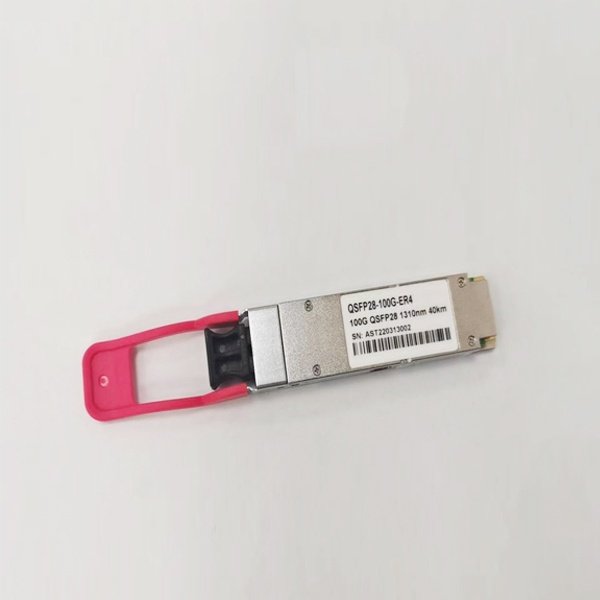
QSFP28-OTU4: Becoming the most common due to its small size and lower power. Supports OTU4 over 2km (SR4), 10km (LR4), or 80km+ (ER4 Lite) using WDM technology.

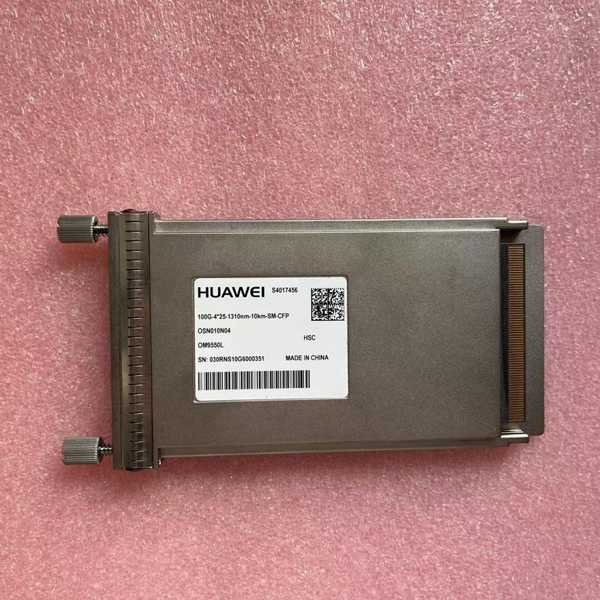
CFP2-OTU4: Also widely used, especially for longer reaches.

Conclusion
| Aspect | OTU4 |
| What it is | A 112 Gbps OTN frame format for transporting 100GbE/client signals. |
| Typical Module | Not SFP. Uses QSFP28 or CFP2/CFP4 form factors specifically labeled for OTU4. |
| Key Use | Carrier optical transport networks with full OTN OAM&P and FEC. |
Bottom Line: If you are looking for a pluggable module to transmit an OTU4 signal, you need to search for “OTU4 QSFP28 Module” or “OTU4 CFP2 Modules” , not a standard SFP or standard 100GbE QSFP28 optical transceiver module.
Always check the datasheet and ensure compatibility with your OTN switch/router/transport equipment.
