

 Skip to content
 The core of the Industrial Internet of Things (IIoT) is the reliable, real-time, and secure connection of “things.” In challenging industrial environments, the physical characteristics of copper cables (susceptibility to interference, short transmission distance, and security risks) become insurmountable limitations. The choice of fiber optic products for IIoT is essentially to address the fundamental challenges faced by traditional copper cables in harsh industrial environments.
Fiber optic products fundamentally solve these problems by replacing “electricity” with “light.” They provide not just simple “connectivity,” but build a highly reliable, high-performance, secure, and future-proof deterministic communication backbone for IIoT systems. Although the initial investment may be slightly higher, from the perspective of system stability, long-term operating costs, and future scalability, fiber optics is the most economical and reliable technology choice for building large-scale, high-value industrial IoT networks. This is precisely why fiber optics has become standard in critical IIoT scenarios, from smart manufacturing to smart energy, from rail transportation to port automation.
The advantages of fiber optics are not singular, but a combination of decisive technical advantages that allow it to effectively cope with harsh industrial environments, long-distance transmission, high bandwidth, and strong anti-interference requirements.
As a fiber optic manufacturer and supplier with over 10 years of experience, Yingda can configure fiber optic cables, equipment, and components to meet customer needs and satisfy various application requirements.
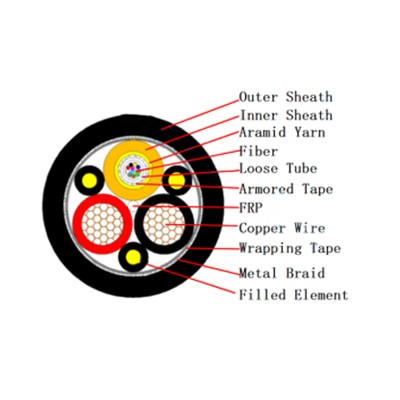
Optical-electrical hybrid cables, armored cables, and OPGW cables features compression resistance, tensile strength, corrosion resistance, rodent resistance, and flame retardancy, suitable for factory floor laying, oil pipelines, power corridors, and other applications. Single-mode fiber is suitable for long-distance transmission in inter-plant backbone networks. Multimode fiber is suitable for short-distance, high-bandwidth applications.

Industrial-grade robust fiber optic connectors, featuring IP67 protection rating, and pre-terminated with various connector types such as DLC/SC/MTP. They are dustproof, waterproof, and suitable for vibrating environments such as connections in mechanical equipment.

Wall-mounted or rack-mounted fiber optic boxes are used for fiber splicing protection and port management, and can be installed inside control cabinets in workshops.

Managed/unmanaged switches support Gigabit /10 Gigabit fiber optic interfaces, enabling device cascading and ring network redundancy (such as PROFINET and EtherNet/IP networks). They support ERPS (Ethernet Ring Protection Switching) and STP/RSTP, ensuring network reliability.

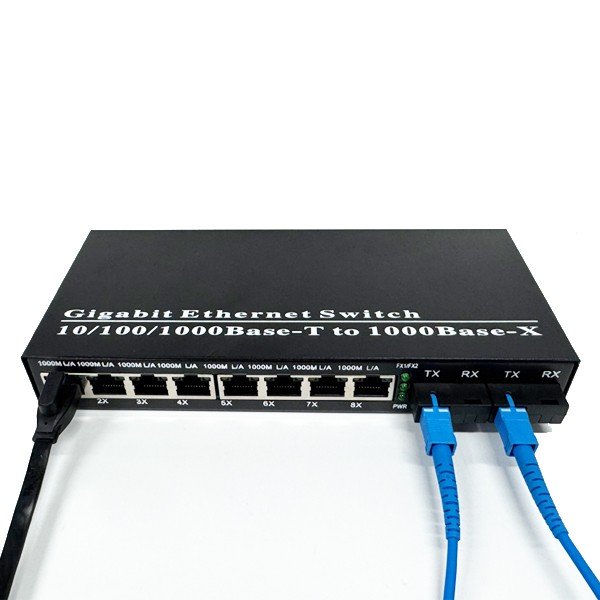
Media converter can convert copper cable Ethernet signals into optical signals. Industrial media converter are designed specifically for industrial environments, IP30-rated metal casing, support a wide operating temperature -40℃ to 75℃. They can be used in harsh environments such as mines, factories, and transportation systems, and support long-distance fiber optic transmission.
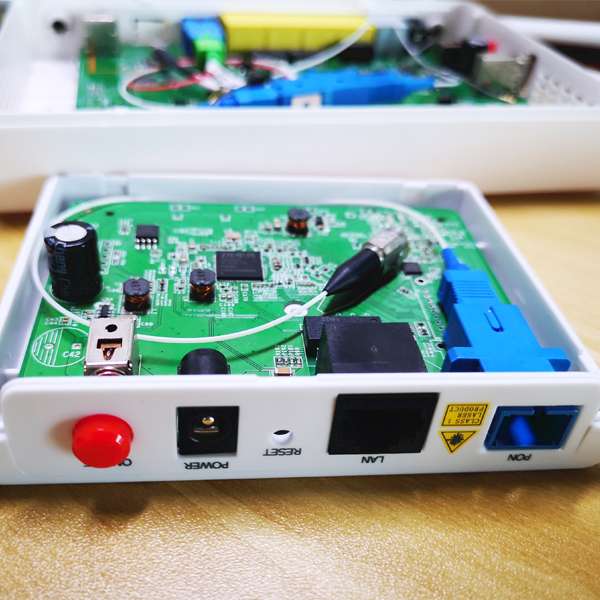
OLT ONU is used in wide-coverage, multi-branch IIoT networks such as smart campuses and interconnected multi-factory facilities, saving on fiber optic resources. Custom XGPON, PON, GPON optical network unit with AC wifi, USB, optical port, CATV, LAN, WAN functions.
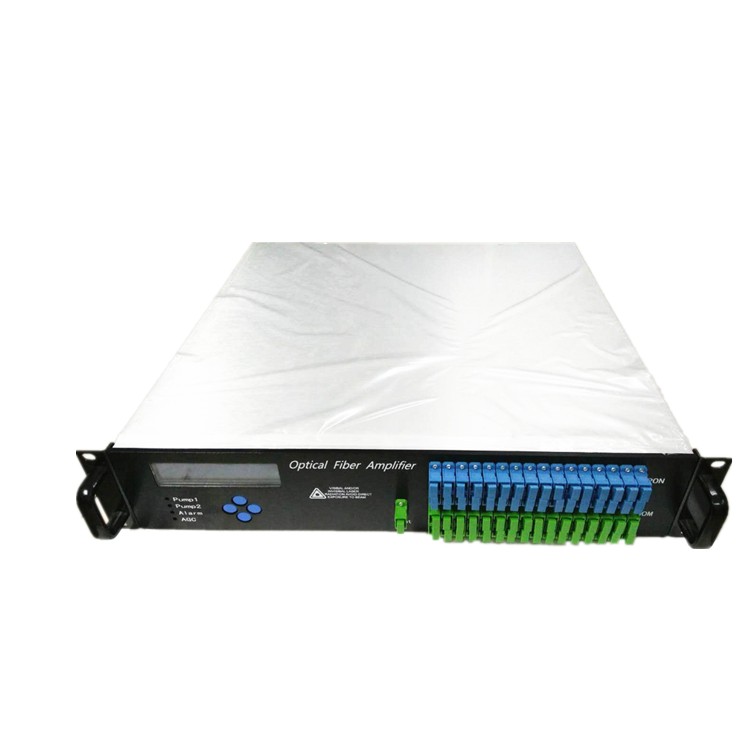
EDFA can extend the transmission distance of optical signals and is used in large oil fields and railway monitoring networks. Custom 8 port, 16 port, or 32 ports.

WDM/CWDM/DWDM/FWDM technologies can transmit multiple signals, such as traffic video, data, and voice signals, over a single optical fiber, enabling efficient interconnection between the command center and multiple remote sites, improving bandwidth utilization, and are widely used in scenarios such as high-definition video surveillance backhaul.
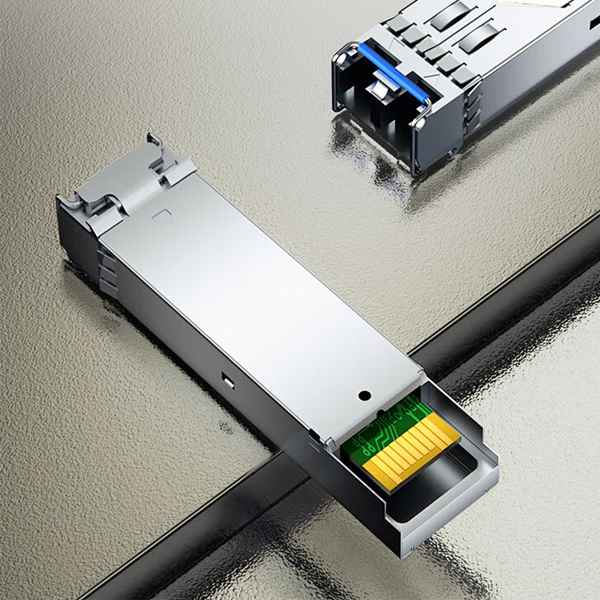
High-speed optical modules can be used for connections between servers and core switches within traffic control centers and cloud computing data centers, with transmission speeds reaching 10G/25G/100G SFP+/QSFP+、QSFP28,etc.
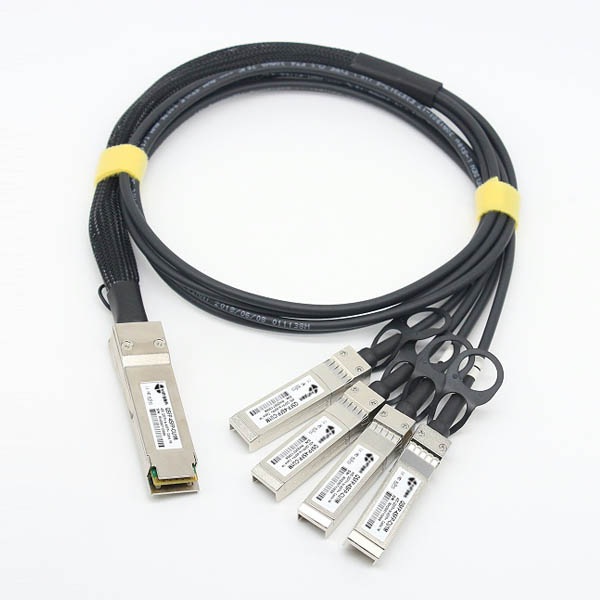
Direct Attach Cables (DACs) are pre-terminated high-speed copper cables used in short-distance, high-density IIoT device interconnection scenarios. These copper cables transmit electrical signals directly, enabling low-latency, high-bandwidth data transmission at a low cost.
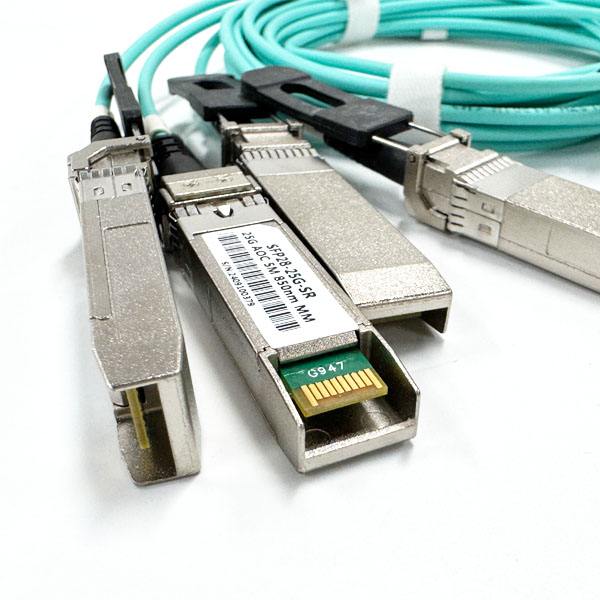
Active Optical Cables (AOCs) are pre-terminated high-speed cables used in IIoT scenarios that require long distances, high bandwidth, and are sensitive to power consumption. Through photoelectric conversion technology, AOCs can achieve longer transmission distances with lower power consumption than traditional optical modules.

WDM/CWDM/DWDM/FWDM technologies can transmit multiple signals, such as traffic video, data, and voice signals, over a single optical fiber, enabling efficient interconnection between the command center and multiple remote sites, improving bandwidth utilization, and are widely used in scenarios such as high-definition video surveillance backhaul.
When customers select fiber optic connectivity products for IIoT applications, it is recommended to focus on the following points:
Typical application scenarios:
| Applications: | Common Products: | Applications: |
| Smart factories | Industrial switches, armored fiber optic cables | Connecting robots, AGVs, and production line control systems |
| Power grid IoT | OPGW fiber optic cables, fiber optic sensors | Power transmission line monitoring and substation communication |
| Rail transit | Vibration-resistant fiber optic cables, industrial PON | Train control signal transmission and video surveillance data transmission |
| Oil and gas pipeline monitoring | Distributed fiber optic sensing systems, single-mode transceivers | Pipeline leak detection and pump station remote control |
| Port automation | Waterproof fiber optic connectors, 10 Gigabit switches | Remote control of gantry cranes and access to IoT sensors |
Step 1
Please describe your requirements as detailed as possible, such as product application,model, images, data sheet if possible, quantity, specifications, loss, packaging, labeling, etc.
Step 2
According to your needs, our company will reply within 2 hours in working time and attach our corresponding quotation, product details, specifications and packaging parameters.
Step 3
If the customer’s requirements change or there are objections, further discuss and modify the plan to reach a final agreement.
Step 4
Customer confirms the contract details and signs the contract.


Yingda provide various metal and plastic waterproof connectors such as PDLC, ODVA, ODC, OptiTap, Mini SC, Slim, YG, J599, NSN, etc., pre-terminated with fiber optic cable, which features IP67 and higher protection ratings.
Industrial gigabit fiber optic transceivers are designed specifically for intelligent transportation, supporting ultra-long-distance transmission up to 80 kilometers, making them particularly suitable for highway monitoring, ETC gantries, and other scenarios, effectively isolating electromagnetic interference.
No, Commercial-grade fiber optic transceivers are designed for controlled environments such as data centers and offices, and are fundamentally incompatible with industrial IoT environments. IIoT environments often involve high temperatures in workshops or low temperatures outdoors (-40°C to 75°C), where commercial-grade equipment would operate unstably or be damaged.
We can provide OPGW fiber optic cables, OPGW metal junction boxes, and fiber optic cable fittings such as OPGW downlead clamps, suspension clamps, and terminal conductors. High quality and competitive prices, welcome to inquire.
Industrial-grade OADM optical add-drop multiplexers allow for flexible adding/dropping of specific wavelengths of services midway through a CWDM/DWDM ring network, making them ideal for distributed IIoT sites (such as pumping stations along oil pipelines).
High productivity efficiency, skilled front-line operators and strict production control ensure timely delivery.
High-precision testing equipment and top industry quality control system ensure high quality standards.
Long-term stable supply chain and cost control that changes in line with market trends ensure the best price

Sorry that there’s no information that interests you. Please fill in the feedback form so that we can improve.