
 Skip to content
 The aerospace industry has extremely high demands for reliability, weight, interference immunity, and data transmission speed. Fiber optic products, due to their lightweight design, high bandwidth, electromagnetic interference (EMI) resistance, and ability to withstand harsh environments, have become one of the core technologies in this field.
In the aerospace field, fiber availability have evolved from auxiliary communication tools to core components for navigation, sensing, weapons, and avionics, driving the development of aircraft towards lighter, smarter, and more reliable designs. With the increasing complexity of space exploration and avionics, the penetration of fiber optic technology will deepen further.
Yingda specializes in the manufacturing and wholesale of various fiber optic products for the aerospace industry, including bend-resistant fiber optic cables, active components, and passive components. All products are selected, packaged, and tested according to a series of stringent standards such as DO-160 (Aerospace Environmental Conditions), MIL-STD-810 (Military Environmental Standards), and ECSS-Q-ST-70 (European Space Standards) to ensure reliability and long lifespan in extreme environments.

MPO connectors can accommodate 12-72 optical fibers, significantly saving space and making them particularly suitable for the compact layouts inside spacecraft. They also support high-speed data transmission between satellites, overcoming the bandwidth limitations of traditional communication methods. The lightweight characteristics of MPO connectors contribute to reducing spacecraft weight, meeting the stringent requirements for equipment size in commercial space applications.

Conforms to MIL-PRF-29504/16 military/aerospace standards, D38999/J599 series aviation grade connectors feature a metal housing and can be used with various bend-resistant fiber optic cables. It offers resistance to vibration and shock, and is widely used in military aircraft exteriors and high-temperature, complex environments.
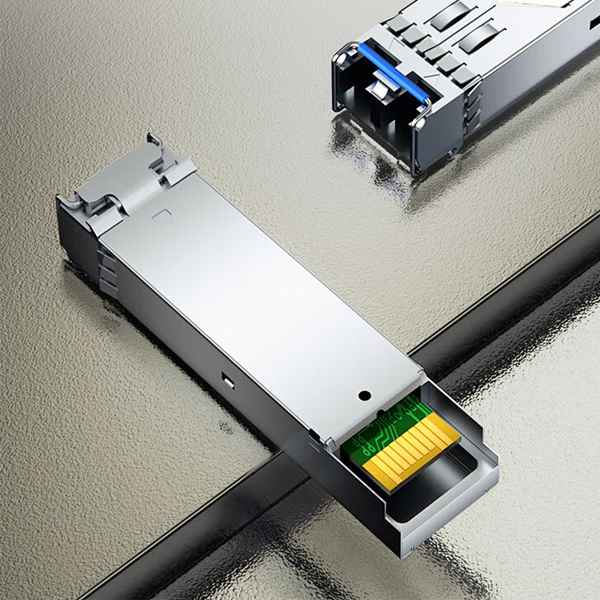
SFP, SFP+, and QSFP optical transceiver modules with wide operating temperature ranges (-55°C to +85°C or higher) are widely used in avionics network switches, routers, and remote data concentrators, and comply with aviation standards such as ARINC 802. In the future, 40G, 100G, and 200G/400G optical modules will be deployed depending on the specific application scenario.

CWDM/DWDM devices transmit multiple wavelength channels over a single optical fiber, significantly increasing the bandwidth density of airborne/spaceborne communication networks. This supports long-distance, high-bandwidth data transmission, meeting the requirements of deep space exploration missions.

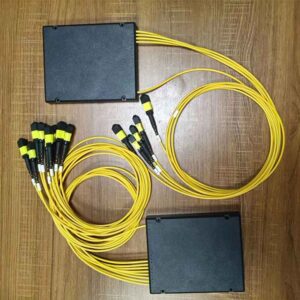
1xN and 2xN series multi-channel fiber optic splitters split a light source to multiple sensors (such as FBG sensor networks) or combine multiple signals into a single fiber. These fiber splitters save space, have low loss, and are widely used in satellite communications, spacecraft internal networking, and sensor networks.
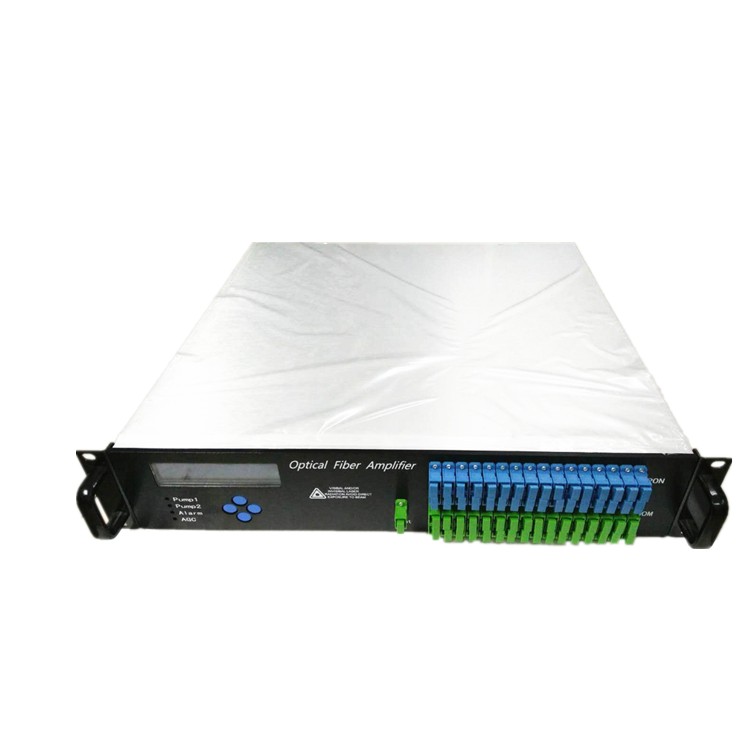
EDFA can directly amplify optical signals in the 1550nm window without photoelectric conversion, and can be used for relay amplification in satellite laser communication terminals and long-distance airborne/shipborne fiber optic links.
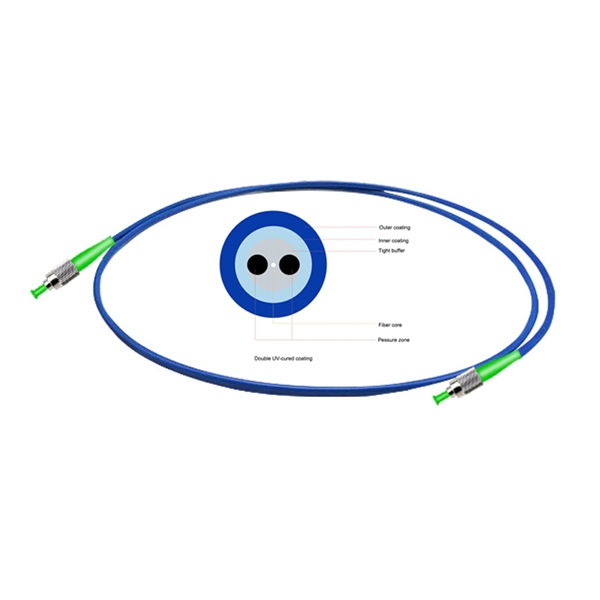
Polarization-maintaining fiber optic patch cords SC FC LC ST are crucial “optical signal stabilizers” in the aerospace field, ensuring the precise operation of navigation, communication, and sensing systems in extreme environments by locking the polarization state of light.

Conventional fiber optic attenuators cannot cope with the polarization state disturbances in the space environment, while polarization-maintaining fiber optic attenuators, by locking the polarization state of light, can maintain signal stability even in the space environment with severe vibrations and temperature fluctuations.
Step 1
Please describe your requirements as detailed as possible, such as product application,model, images, data sheet if possible, quantity, specifications, loss, packaging, labeling, etc.
Step 2
According to your needs, our company will reply within 2 hours in working time and attach our corresponding quotation, product details, specifications and packaging parameters.
Step 3
If the customer’s requirements change or there are objections, further discuss and modify the plan to reach a final agreement.
Step 4
Customer confirms the contract details and signs the contract.
Bare fibers have clear application scenarios in the aerospace field, but challenges related to environmental adaptability, cost, and maintenance need to be overcome. Future performance improvements can be achieved through technological breakthroughs and system integration optimization.
In addition to commonly used SC, LC, FC, ST, and E2000 connectors, commonly used fiber optic connectors for aviation applications include the J599 series, GYM series, and field deployable fiber optic connectors.
The demand for polarization-maintaining fibers in aerospace stems from their three core capabilities in extreme environments: high-precision navigation, high-speed communication, and safety protection. Polarization-maintaining fibers are wound into a ring shape, serving as the core component of fiber optic gyroscopes, achieving high-precision angular velocity measurement by maintaining stable light polarization. This ensures that the polarization state remains stable even under extreme temperatures.
Aerospace optical fiber products are undergoing disruptive changes, and future development will accelerate around three main directions: breakthroughs in hollow-core fiber technology, cost optimization, and system integration.
Aerospace equipment experiences severe vibrations and complex wiring during flight. Bend-resistant fibers, through special structural designs (such as G.657 fibers), increase the bending radius tolerance to 1/2 to 1/4 of traditional fibers, ensuring low signal loss even when bent. The aerospace environment involves dynamic stresses such as sudden temperature changes, wind vibration, and ice loading. The material and structural design of bend-resistant fibers effectively resist these stresses, ensuring long-term stable operation.
The aerospace field prefers single-mode fibers, which perform better in terms of long distance, high speed, and interference resistance, effectively meeting the demands of complex environments.
MPO fiber optics, with its high integration density, environmental adaptability, high-speed transmission, and reliability, has become the preferred solution for aerospace communications. In the future, with the development of hollow-core fiber technology, its performance will be further enhanced.
High productivity efficiency, skilled front-line operators and strict production control ensure timely delivery.
High-precision testing equipment and top industry quality control system ensure high quality standards.
Long-term stable supply chain and cost control that changes in line with market trends ensure the best price

Sorry that there’s no information that interests you. Please fill in the feedback form so that we can improve.