 Skip to content
Single fiber SFP module and dual fiber SFP module are two common SFP module types, and they differ significantly in structure, working principle, and application scenarios. Let’s explore it in details as follows:
1. Structure and Interface
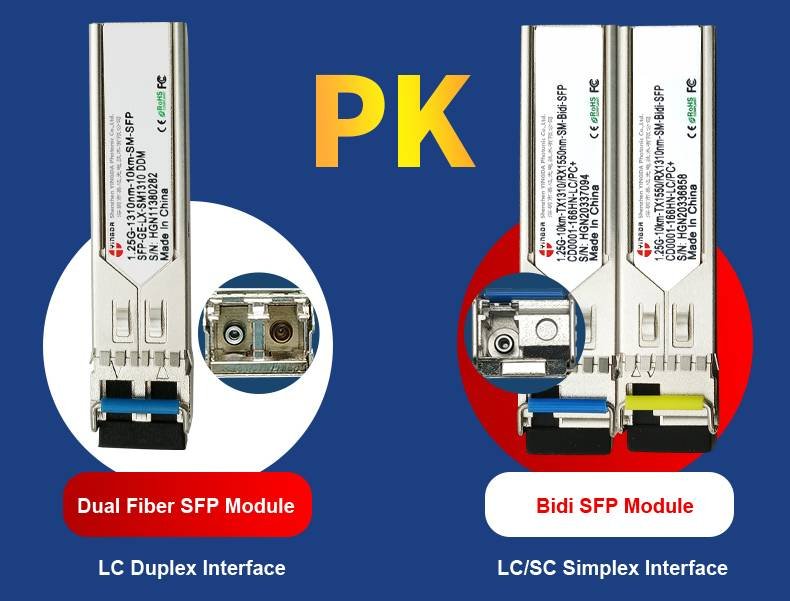
Single fiber SFP module: It is also called bidi sfp module, which has only one optical interface, enabling simultaneous transmission and reception of optical signals through a single fiber. It utilizes wavelength division multiplexing (WDM) technology, using different wavelengths to distinguish between transmitted and received signals.
Dual fiber SFP module: it has two independent optical interfaces (TX and RX), used for transmitting and receiving signals respectively, requiring two fibers for bidirectional communication.
2. Working Principle
- Single-fiber SFP module: BIDI SFP module transmits bidirectionally through a single optical fiber. The transmitting and receiving ends must be paired using modules with different wavelengths (e.g., TX 1310nm/RX 1550nm and TX 1550nm/RX 1310nm).
- Dual-fiber SFP module: Duplex LC SFP module transmits and receives signals through independent optical fibers. The wavelengths of the modules at both ends must be consistent (e.g., both 850nm).
To distinguish between BIDI sfp module and dual-fiber modules, refer to the label on the module. If it has both TX and RX wavelengths, it’s single-fiber; if it only has one wavelength, it’s dual-fiber.

3. Wavelength and Data Rate
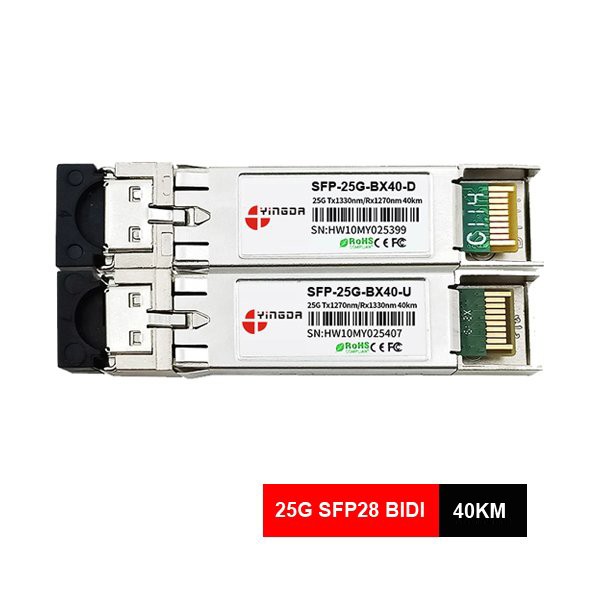
- Bidi SFP module: Diverse wavelength combinations (e.g., 1310nm/1550nm, 1270nm/1330nm), suitable for speeds from 100 Mbps to 10 Gbps, commonly used in access networks and other scenarios.
- Dual-fiber module: Fixed wavelengths (e.g., 850nm, 1310nm, 1550nm), offering superior stability in high-speed (e.g., 40G/100G) scenarios.
4. Application Scenarios
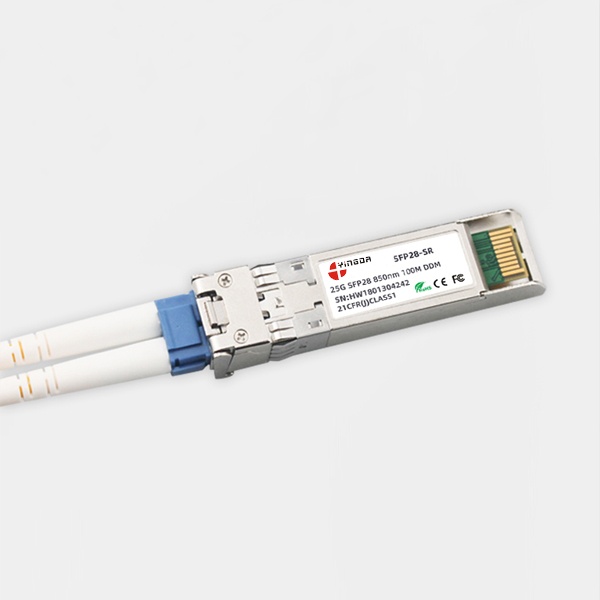
Bidi SFP module: Suitable for scenarios with limited fiber optic resources and cost sensitivity (such as metropolitan area networks).
Dual-fiber SFP module: Suitable for scenarios with high requirements for transmission quality and stability (such as data centers and telecommunications transmission).
5. Performance and Resource Utilization
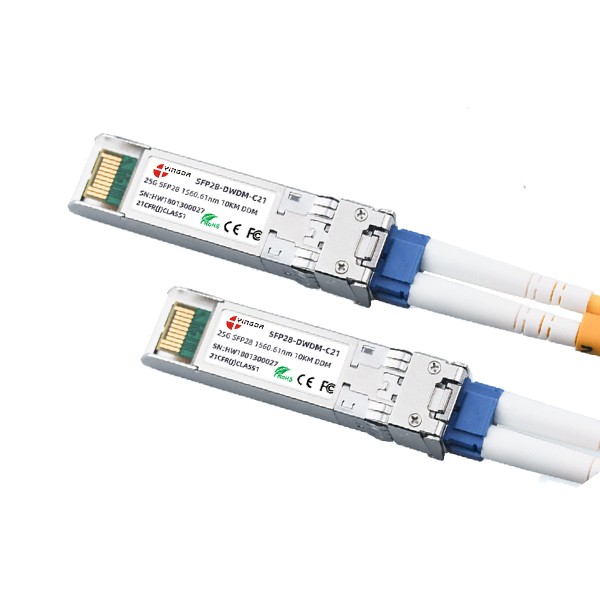
- Bidi SFP module: Saves fiber resources, but signal quality is relatively lower.
- Dual-fiber SFP module: Longer transmission distance and higher optical power budget, but requires more fiber.
Conclusion
When you choose fiber transceiver, there is no inherent superiority or inferiority between the two types; the choice depends primarily on actual needs: If saving fiber is required and stability requirements are not high, single-fiber sfp module is an option; if high performance and reliability are prioritized, dual-fiber sfp module is more suitable.
FAQ
Which is more stable, single fiber or dual-fiber SFP module?
Dual-fiber modules are more stable. They use independent fibers for signal transmission and reception, ensuring complete physical isolation and strong anti-interference capabilities, making them suitable for long-distance or high-load environments. Bidi transceivers, due to their use of wavelength division multiplexing (WDM) technology, may experience signal attenuation issues, resulting in relatively lower stability.
Is much price difference between single-fiber and dual-fiber SFP modules?
Bidi SFP modules require support for wavelength multiplexing technology, leading to higher costs; dual-fiber modules have a simpler structure and are more affordable. For example, a gigabit single-fiber module may cost 20%-30% more than a dual-fiber module.
How do I know if my switch needs single-fiber or dual-fiber transceiver?
If stability and long-distance transmission (>10km) are required, choose dual-fiber transceiver; if you need to save fiber resources and stability requirements are not high, you can consider single-fiber. Single-fiber sfp modules must be used in pairs with matched wavelengths (e.g., 1310nm/1550nm) with SC or LC interface, while dual-fiber sfp modules only require consistent wavelengths with LC interface, both requiring compatibility with the switch ports.
